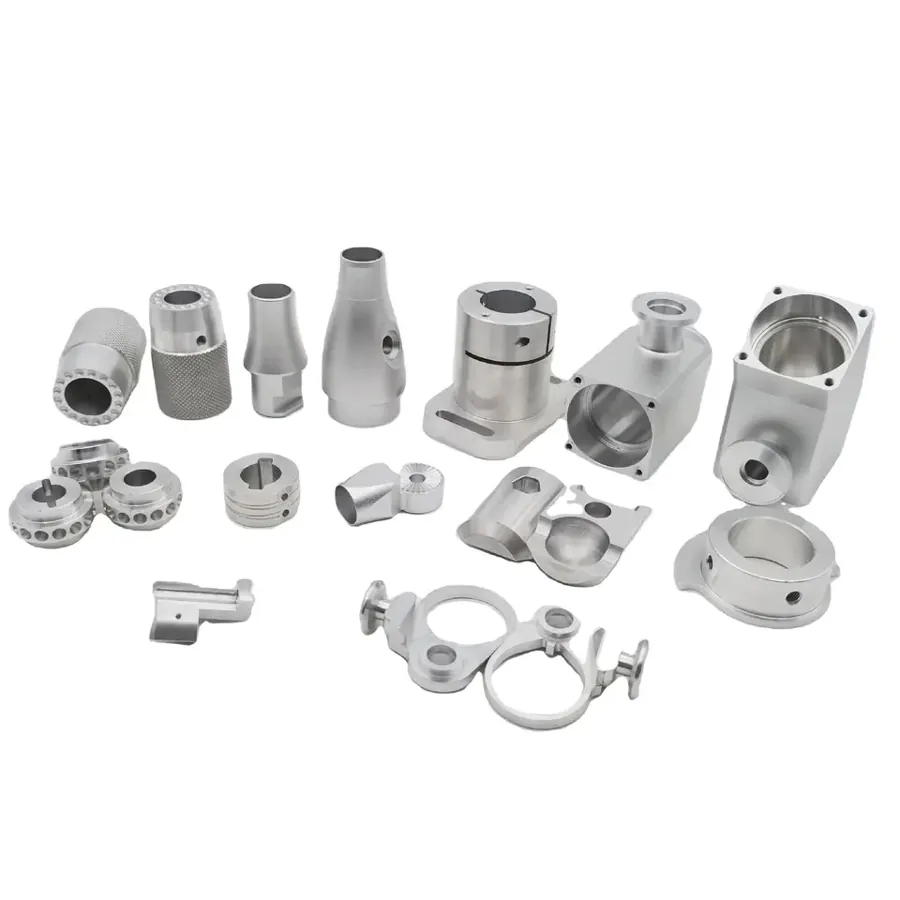
Process · Anodizing
An integral, hard oxide layer grown from the aluminum itself — for corrosion resistance, wear resistance and color that will not chip off like paint.
Anodizing converts the surface of aluminum into a hard, porous oxide by an electrochemical process. Because the layer is grown from the metal rather than added on top, it cannot peel — it becomes part of the part. That makes it the default finish for aluminum that must resist wear, corrosion or daily handling.
Types & specifications
| Property | Type II (standard) | Type III (hardcoat) |
|---|
| Thickness | 5 – 25 µm | 25 – 50+ µm |
| Hardness | Hard | Very hard (wear surfaces) |
| Color | Wide range + black/clear | Naturally dark, limited colors |
| Typical use | Enclosures, trim, brackets | Pistons, guides, wear parts |
Design notes
- Account for ~half the coating thickness adding to each dimension on tight-tolerance features.
- Mask threads and electrical contact points — the layer is an insulator.
- Choose 6061/6063 for the most even color; high-copper alloys anodize less uniformly.
Anodizing suits 6061 and 6063; for color on steel or thick build, use powder coating instead.
Frequently asked questions
What is the difference between Type II and Type III anodizing?
Type II is standard decorative/protective anodizing (about 5–25 µm) and takes color well. Type III (hardcoat) is thicker (25–50 µm+) and much harder, used for wear surfaces — it looks darker and less bright.
Does anodizing change part dimensions?
Yes, slightly. The oxide layer grows partly into and partly out of the surface, so about half the coating thickness adds to each dimension. On tight-tolerance parts we account for this before machining.
Can anodized aluminum be any color?
Type II accepts a wide range of dyed colors plus clear and black; Type III is naturally dark and offers fewer colors. Color consistency depends on the alloy — 6061/6063 anodize most evenly.
Is anodizing conductive?
No — the anodic layer is an electrical insulator. If you need a conductive surface, mask those areas or choose a conductive finish like chromate/alodine instead.