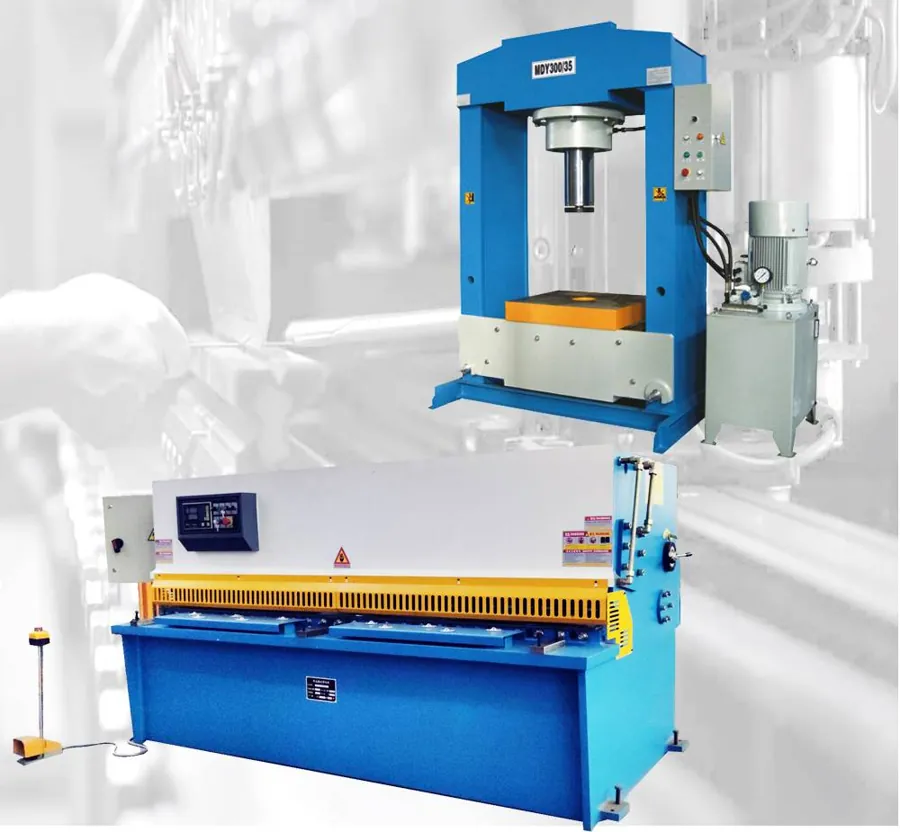
Process · Drawing
Seamless cups, shells and enclosures drawn from flat blank — strong, watertight and economical at volume.
Deep drawing forms a flat blank into a hollow, seamless shape in one stroke or several. Because there is no seam, drawn parts are strong and leak-tight — ideal for housings, cans and shells — but the process needs tooling and a ductile material.
Capabilities & limits
| Parameter | Detail |
|---|
| Shapes | Cups, shells, cans, enclosures, round and rectangular |
| Stages | Single or multi-stage with inter-stage annealing |
| Materials | 5052/1100 aluminum, low-carbon steel, 304 stainless |
| Limit | Draw ratio — deep parts need progressive stages |
| Best volume | Mid-to-high (tooling amortized) |
Design notes
- Generous corner and bottom radii draw better than sharp ones, which tear.
- Choose a ductile 5052 aluminum or low-carbon steel for deep parts.
- For boxy or low-volume parts, compare cut-bend-weld fabrication instead.
Frequently asked questions
What is deep drawing?
Deep drawing pulls a flat blank into a hollow shape — a cup, shell or enclosure — with a punch and die. Depth beyond about half the diameter usually needs several draw stages with annealing between them.
What is the draw ratio?
The draw ratio compares blank diameter to part diameter and limits how deep a part can be drawn in one stage. Exceeding it tears the wall, so deep parts are drawn progressively.
Which materials draw well?
Ductile metals draw best — 5052 and 1100 aluminum, low-carbon steel, and 304 stainless. Harder, less ductile alloys crack and are unsuitable.
Drawing or fabricating from sheet?
Drawing gives seamless, strong hollow parts at volume but needs tooling. For low volume or boxy shapes, cut-and-bent-and-welded fabrication is usually cheaper.