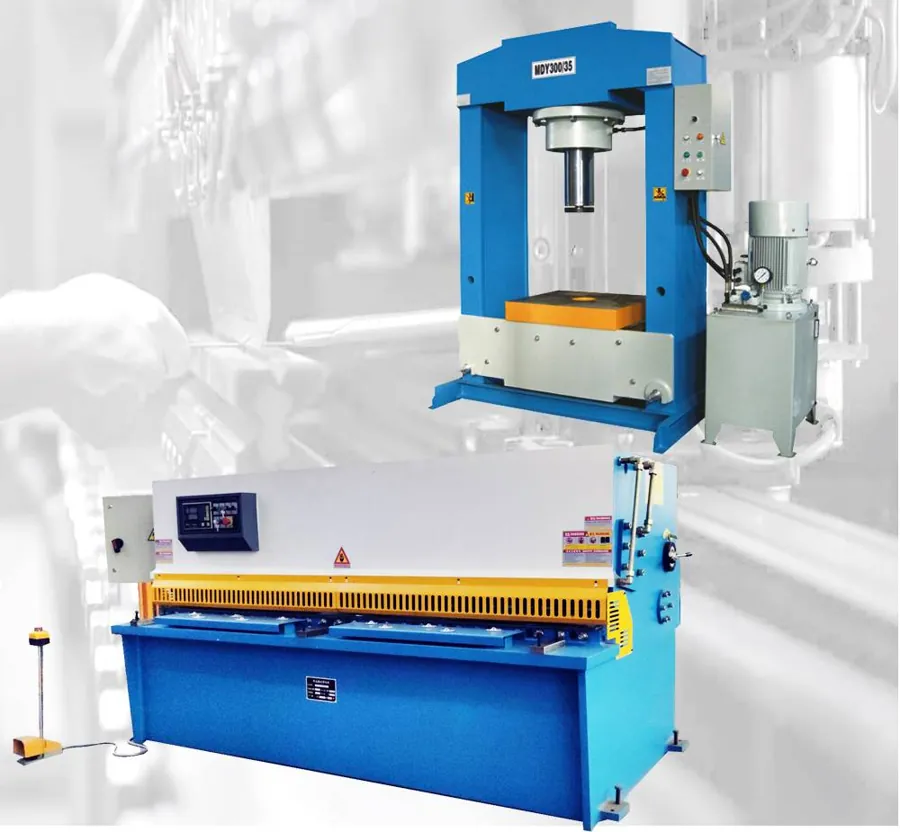
Process · Stamping
Die stamping and CNC punching for higher-volume sheet parts — fast, repeatable and economical once the tooling is amortized over the run.
Stamping shapes and cuts sheet between a punch and die. Once the die exists, each stroke produces a part in a fraction of a second, which makes stamping the economical choice for volume — the trade-off is the up-front tooling cost.
Capabilities at a glance
| Parameter | Range |
|---|
| Methods | Single-stage die · progressive die · CNC turret punch |
| Press tonnage | up to 250 t (heavier on request) |
| Material thickness | 0.3 – 6 mm |
| Feature tolerance | ±0.05 – 0.1 mm |
| Best volume | mid-to-high (tooling amortized) |
Design for stamping
- Keep punched holes at or above material thickness, and at least one thickness from edges and each other.
- Allow a small radius on internal corners — sharp corners crack the tool and the part.
- For low volume or prototypes, laser cutting avoids tooling cost; switch to stamping as volume grows.
See the tolerance reference and pick the material before tooling.
Frequently asked questions
When is stamping cheaper than laser cutting?
Stamping wins at volume. A stamping die costs more up front but each hit is fast and cheap, so above a few thousand identical parts the per-part price drops well below laser. Below that, laser avoids the tooling cost.
What is a progressive die?
A progressive die performs several operations — punching, forming, cutting — at successive stations as the strip advances, producing a finished part each stroke. It suits high-volume parts with multiple features.
What tolerance does stamping hold?
Stamped feature tolerances are typically ±0.05–0.1 mm depending on material and die condition; hole-to-hole positions held by the die are very repeatable across the run.
What is the minimum hole size?
As a rule the smallest punched hole equals the material thickness; smaller holes risk punch breakage and need drilling or laser instead.