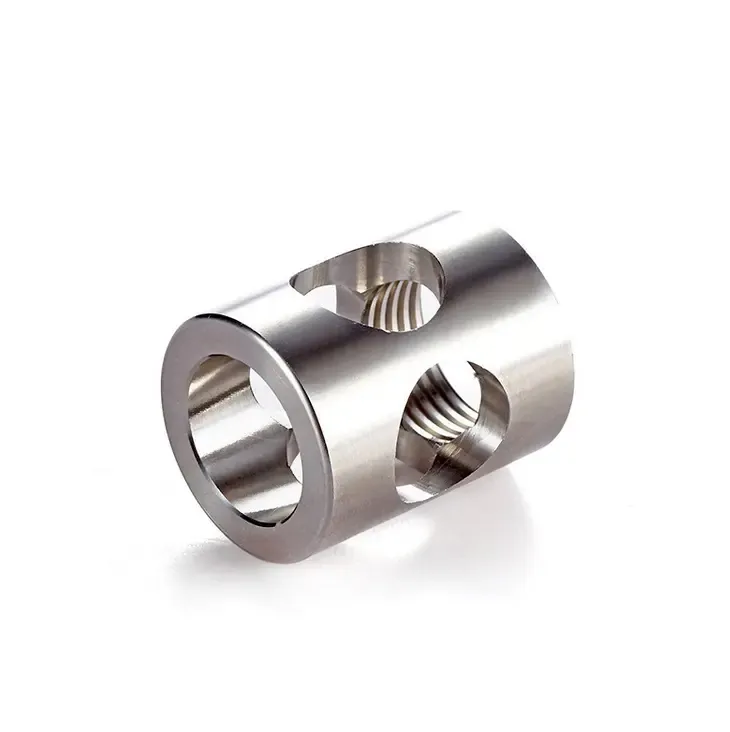
Process · Swiss
Sliding-headstock turning for small, slender, high-precision parts in volume — where a standard lathe would let a thin part deflect and lose accuracy.
A Swiss-type lathe feeds the bar through a guide bushing so the material is supported right where the tool cuts. That eliminates the deflection that limits standard lathes on small, long parts — which is why Swiss machining owns the market for precision pins, shafts and connector parts.
Capabilities at a glance
| Parameter | Range |
|---|
| Diameter | Ø1 – Ø32 mm |
| Length-to-diameter | High — long slender parts stay accurate |
| Tolerance | ±0.005 – 0.01 mm typical |
| Features | Turned + live-tool milling, cross-holes, threads |
| Best volume | Mid-to-high; finished complete off the machine |
Typical parts
- Connector and contact pins, shafts and spindles.
- Medical and dental components in 316L and titanium.
- Electronic and instrument hardware in brass and stainless.
For larger or non-slender turned parts, standard CNC turning is the better fit.
Frequently asked questions
What is Swiss machining best for?
Small, slender, high-precision turned parts made in volume — connector pins, shafts, medical and electronic components. The sliding headstock supports the bar right at the cutting tool, so long thin parts stay accurate.
What diameter range do you run?
Roughly Ø1 to Ø32 mm. Swiss machines excel at small diameters and long length-to-diameter ratios that would deflect on a standard lathe.
Does Swiss machining include milled features?
Yes — live tooling adds cross-holes, flats, slots and threads so a complex small part is finished complete off the machine.
Is it economical for low volume?
Setup favors volume; for a few prototype pieces a standard lathe may be cheaper, but for hundreds-plus of small precision parts Swiss is both faster and tighter.